
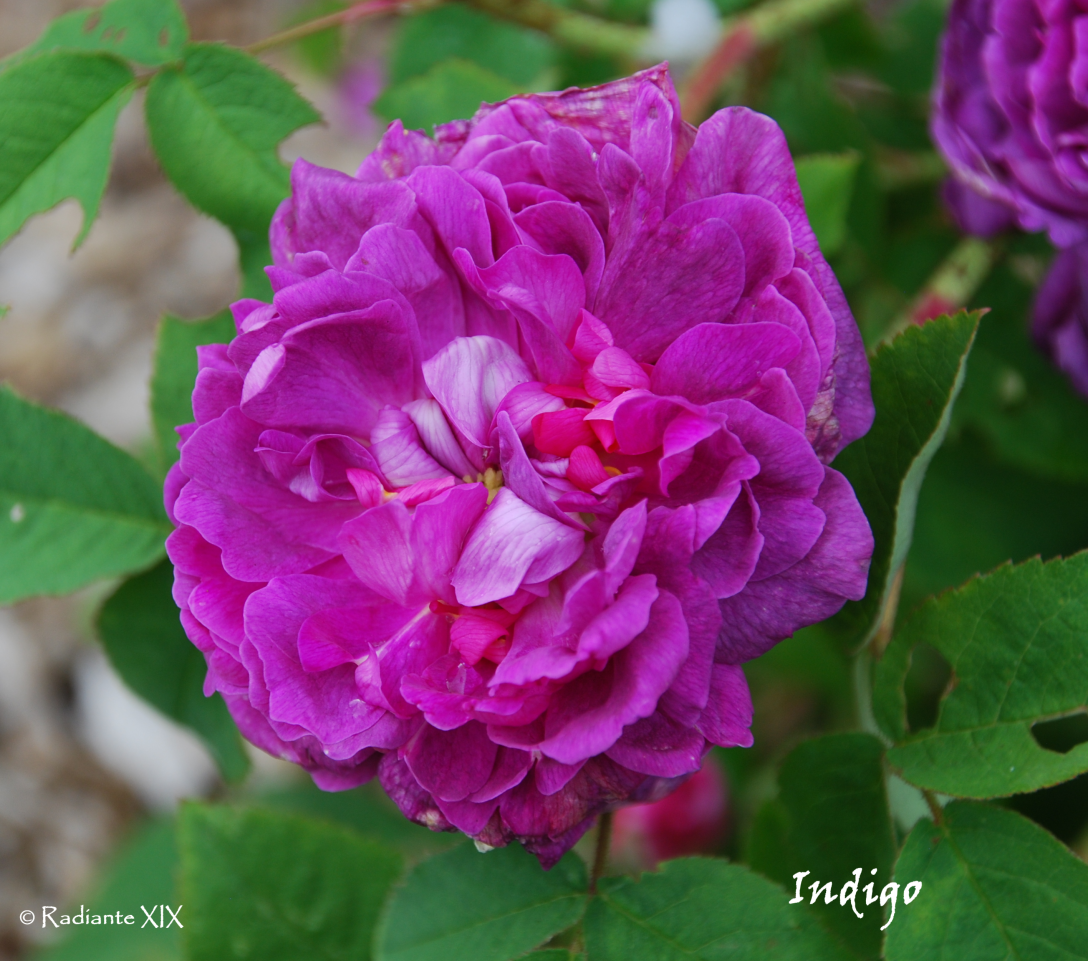
‘Indigo’, not a blue rose at all!

Visit a DIY store and you will be bemused by the names of paint. ‘Elephant’s Breath,’ hmm could that even be a colour? Dead Salmon seems unappealing even when the dead means flat as in not shiny. Pink was originally a murky yellow green only moving to describe light red in the late seventeenth century. The name of today’s rose appears to fall into these vague or confusing colour categories as we have the Portland rose – ‘Indigo.’ Not a deep midnight blue at all but mauve. Roses do not have the gene that produces the blue pigment delphinidin, (unless genetically modified) but nineteenth-century growers endlessly pursued the dream of breeding a blue rose. Perhaps naming this rose for a strong blue colour was a marketing ploy to tempt buyers?

Whatever the story behind the name ‘Indigo’ is a pretty rose. She can vary in colour according to sunlight and temperature, ranging from a dark purple through to mauve, sometimes with a streak of white or crimson. The petal backs are a little paler giving an attractive appearance. She will fade slowly as the large bloom matures ending up as a slaty pinkish grey. A small yellow button peeps through the double petals. Blooms appear either singly or in small clusters from June through to autumn. Delicious fragrance.

An early rose dating from pre-1845, bred by Jean Laffay. ‘Indigo’ reaches around one metre and is quite upright, so she does not take up so much space. Dark prickly stems with matt green foliage. Disease resistant although mildew might visit in very dry summers. Said to grow well in poor soil. USDA zo
‘Madame Laurette Messimy’ – an easy rose for busy gardeners

Last summer the manager of one of the UK’s leading rose nurseries told me that buyers want easy to grow, disease free roses with good fragrance that bloom continuously or at least repeat bloom at short intervals. This statement was to explain their policy of dropping the older varieties in favour of the modern ones. Is it just modern roses that fall into this exacting category? I would argue that a number of the older roses are easy to grow, resistant to disease and delight with fragrant blooms from June to late autumn. Of course, there are older varieties that do not fit the bill and there are miserable, spot ridden modern roses that disappoint.

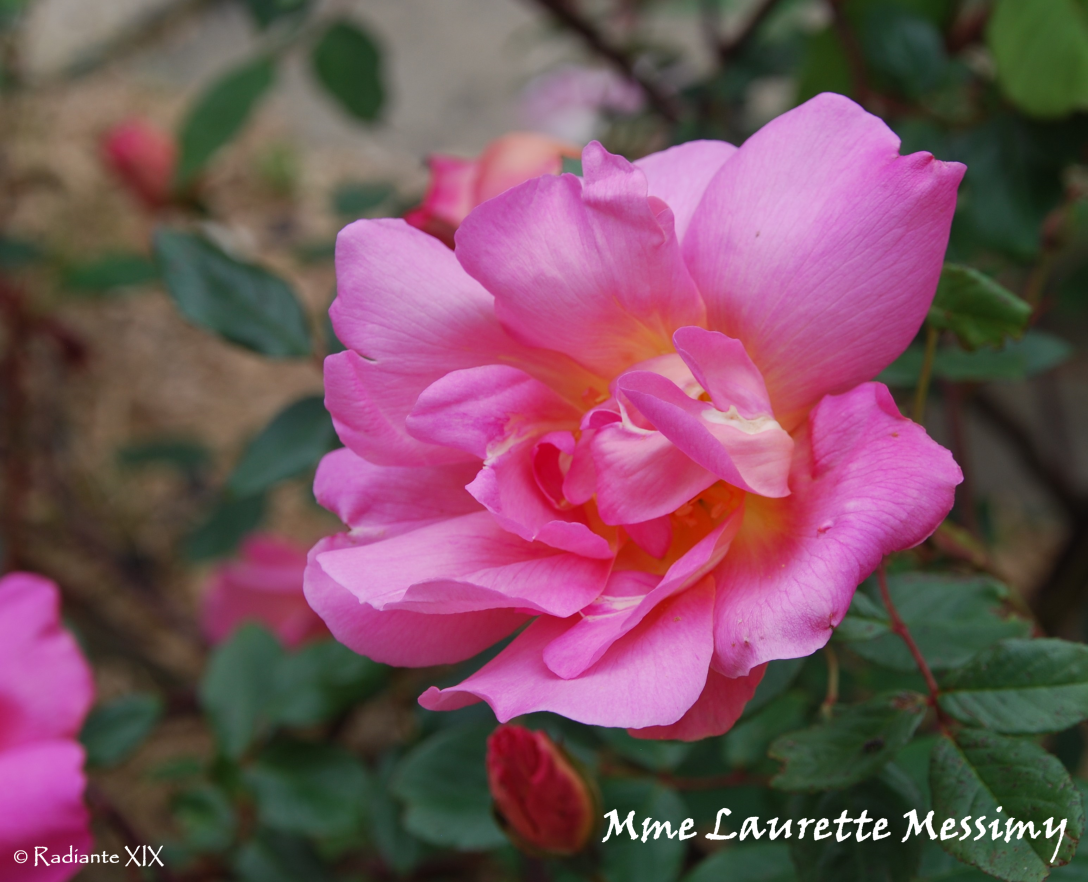
Today’s rose is one that ticks most of the boxes – ‘Madame Laurette Messimy.’ A China rose of huge charm and elegance. Her semi double blooms are not always the tidiest, but this is part of her charm. Highly variable in the colour ranging from pale pink through to bright salmon flushed with yellow, coral, and peach. Her poor point is the fragrance, elusive describes it best. Some days nothing and then she surprises with a soft light perfume. To make amends for the lack of perfume she gives a lot of bloom and just keeps going. On the first day of 2022 in the current exceptionally mild weather she has blooms and buds. Chilly weather will slow her down, but it is rare not to find a bloom or two. Not a great fan of the rain though. In June she was in full bloom and looked magnificent. Then the monsoon rain arrived, and she buckled under the weight of sodden petals. Honestly, she looked like a drunken wedding guest surrounded by damp confetti. Happily, she revived with a bit of sun and warmth.

Airy in her growth habit with dark plum stems which are almost thornless, just the odd prickle. Very healthy, as are all the Chinas. Aphids might appear but not a spot of fungal disease. Tall for a China, she is around 1.20m here in Suffolk and the same width. Would prefer for you not to approach with the secateurs, just leave her alone unless she is encroaching onto another favoured plant. Hardy USDA zones 7b-10b. Widely available.

‘Madame Laurette Messimy’ has two Tea parents, the seed parent Rival de Paestum and the glorious Madame Falcot the pollen parent. Bred by Jean-Baptiste André Guillot and introduced in 1887.

Who was the real Madame Messimy? Born Laurette Marie Anne Girodon in 1845, she married the notary Paul Charles Léon Messimy. I can find little information about her but her eldest son led an interesting life. Adolphe Messimy initially was a military officer, then a journalist and politician. He served as Minister of War in 1912 and again in 1914. He resigned early in WWI and returned to the army as an officer. A brave soldier, promoted to General by 1917 and awarded the Croix de Guerre. Said to be one of the many lovers of Mati Hari during her spying career.

I feel Madame Laurette Messimy is a stellar rose and well worth growing. She is a plant and stand back rose with little or no maintenance, ideal for busy (or lazy) gardeners.

Originally published 1st January 2022 on my Facebook blog Rose of the Day.

‘Archiduc Joseph’? Or maybe ‘Monsieur Tillier’??

A Tea rose with a twin identity today, ‘Archiduc Joseph’ or ‘Monsieur Tillier’? Are these two discrete roses or the same? Most authorities consider this rose to be the same but disagree on which of the two names to use.  I bought mine as ‘Archiduc Joseph’ from Peter Beales, so he remains with this name. Not the only Tea rose with a muddled identification, ‘Clementina Carbonieri’ and ‘Souvenir de Gilbert Nabbonand’ are believed to be just one rose.

‘Archiduc Joseph’ is a seedling from the Tea rose ‘Mme Lombard’, discovered in 1892 and introduced to the market by Gilbert Nabonnand of Golfe Juan on the Côte d’Azur. Gilbert introduced an astonishing two hundred and nine roses. He concentrated on China and Tea roses, but a fair number are now lost to cultivation.

However, if we think this rose is ‘Monsieur Tillier’ the breeder is Jean-Alexandre Bernaix of Villeurbanne-Lyon who introduced his rose in 1892. The breeding is not recorded.

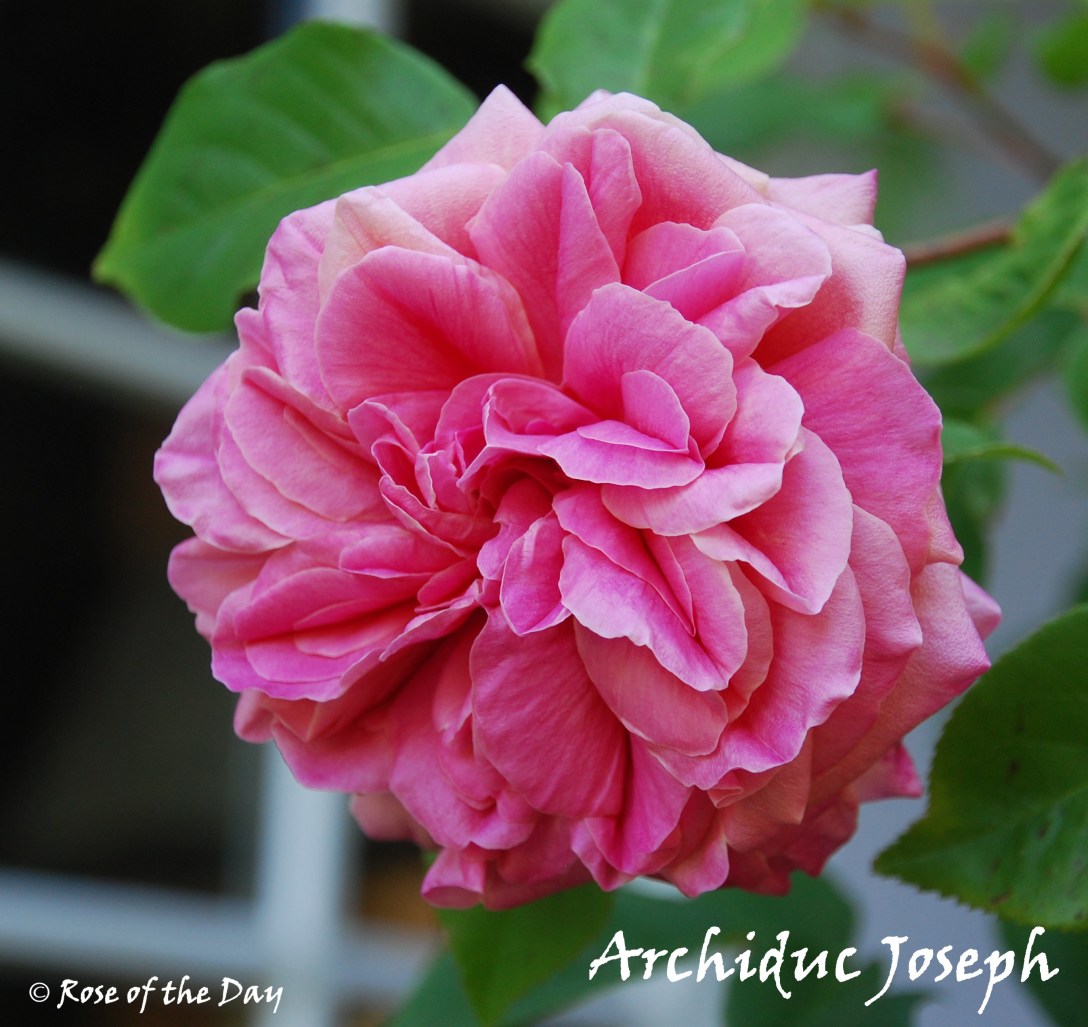
‘Archiduc Joseph’ gives us small pink buds, either singly or in small clusters. Opening to a smallish double enchanting pink, orange, and coppery toned blooms. These colours can vary according to temperature, with purple hues also appearing. A ‘brick’ red tone is also mentioned in the literature.  The dark backed petals quickly reflex into quills, resulting in a small fiery sun of a bloom.  Intoxicating ‘Tea’ fragrance as well. He blooms practically continuously well into the autumn.

Healthy dark matt green foliage on smooth thornless stems. A neat tidy growing habit, he can reach 1.5m here in the UK but much taller, around 3m, in warmer climates. Disease resistant. Not a lover of secateurs, just leave him to quietly grow. Hardy USDA zone 6b-9b, these are roses that appreciate sunny sheltered spots. Widely available but he may be sold under the name ‘Monsieur Tillier’ in the States and Australia.

Pinning a namesake is tricky where one has several individuals who have carried a particular title, there are a fair number of Archiduc Josephs. A single reference ties this rose to Joseph Charles Louis of Habsburg-Lorraine, Archduke of Austria, and Count Palatine of Hungary (1833-1905). A patron of Nabonnand, a botanist, and creator of the Margitsziger Park in Budapest, and in his spare time he compiled a Romany grammar. His sister Elisabeth Françoise Marie of Habsburg-Lorraine is the likely namesake of the Hybrid Perpetual ‘Archiduchesse Élizabeth d’Autriche’.

If this is ‘Monsieur Tillier’ this rose is named for the former head of the National School of Horticulture in Versailles.

Name issue aside ‘Archiduc Joseph’ is a charming rose that grows easily and keeps on giving blooms over a long season. Not a cold climate rose for my readers who garden in more chilly areas but if you are in USDA zones 6b and warmer this is a rose to consider.

Originally appeared on my Facebook blog ‘Rose of the Day’ 15th March 2022