
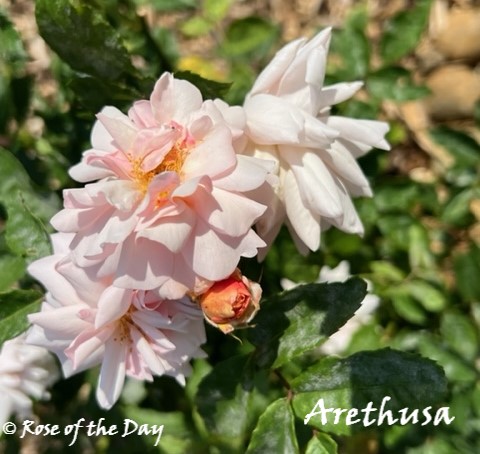
We are still in the grip of a fierce drought here in East Suffolk. The lawn is brown and crisped to death, and I walk miles watering the roses. This morning’s rose ‘Arethusa’ was chosen in the hope this would stimulate some rain. Arethusa, one of the Greek Nereids, left her home in Arcadia, and appeared as a freshwater fountain in Sicily.
Bred by William Paul, introduced in 1903 ‘Arethusa’ is a late addition to the China group. A sensation at the time of her introduction due to the then unusual orange tints. We have so many roses now with this colouration that it can be unremarkable, but this rose remains eye catching. The orange colour appears in the bud, fading through apricot pink as the bloom opens. A soft pink at first before paling to white, the heat and sun at the beginning of the week bleached the blooms all too fast. The petals reflex and scroll, forming charming quills of pale pink. The fragrance is Tea like but as with a lot of the Chinas, it is somewhat elusive. Some days a noticeable perfume from a distance, but the next time you visit and plunge your nose into the bloom it will have vanished. Repeat blooms reliably.
In a normal season, this is a healthy rose but the sharp eyed amongst will notice a dusting of powdery mildew, (Podosphaera pannosa). This is a fungal infection that enjoys dry soil conditions, heat, and high humidity. Typically, climbers are the first to be infected as they experience dry soil when planted against a wall. This infection can rapidly defoliate a rose, and severe infections over a few years will stunt growth to the point of death. Fast moving as well, you need to be vigilant to spot the first signs on the ends of the upper stems. Powdery mildew starts at the top of the bush/climber and moves downwards, Black Spot is the other way – starts at the bottom and moves upwards. I sprayed the infected roses early in the season in May, but the dry weather continued, and more roses had a touch or two. I tried a different approach by watering the infected roses copiously, and flooding the bed, three times a week. This has worked, there are still minor infections but where the new growth has appeared it is free of mildew. And there is a lot of new growth from the heat, and watering. Whether this approach will work each year I do not know but it is worth trying. I have a preventative strategy with fungicides using them in the winter rather than a curative one in the summer. Summer spraying, curative, is a less effective use of fungicide as well. Also, this means a head torch in the dark at midnight to avoid any day flying insects, but you will hit several moths with the spray. Given that all insect numbers are falling responsible gardeners should take care.
Back to the lovely ‘Arethusa’. Not too large, around 1m in height and breadth. Possible in a large container but happier in the ground. Widely available. USDA zone 7b-10b. Requires little pruning. If you deadhead, then she repeats very quickly. Thoughts and comments are welcome as always.
First posted in the very dry summer of 2022, 24th July, on my Facebook blog Rose of the Day.

 Rose of the Day